Distant Voices/Still Lives
Curator:
Vanessa Joan Müller
BRAUNSFELDER, Cologne - Germany


The title of the exhibition is borrowed from a film by Terence Davies, Distant Voices, Still Lives, an impressionistic montage of images about his childhood in Liverpool during the 1940s and 1950s. In our case, two artistic positions enter into a dialogue, translating moments of memory and the negotiation of identity into suggestive and conceptual
visual language. The works of Helena Parada Kim and Živa Drvarič address approaches to the past, including the biographical, but also explore the points at which the self and the other, experience and memory become blurred
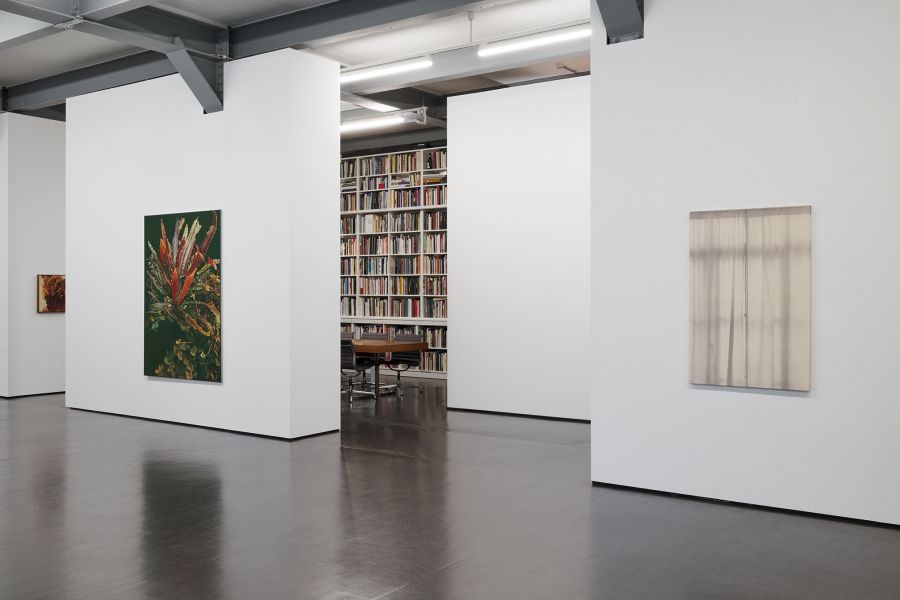

Živa Drvarič creates spaces that trace the interplay of objects and architecture in a still-life-like manner. The absent inhabitants seem to have inscribed their physicality into this world of objects, leaving behind an eloquent emptiness.
However, by reinterpreting individual elements or modifying the appearance of everyday objects, Drvarič casts unsettling doubt on our perception of them and how they compare to reality. Where the real and the imaginary overlap, our inner world of imagination enters the supposedly familiar—yet fleeting—reality. Shadows then trace vestiges of sunlight which is not (or no longer) visible.

Although Helena Parada Kim takes a completely different approach, she shares a similar view of the world of things and their potential as subjective storage media for relating the past to the present, absence to presence.
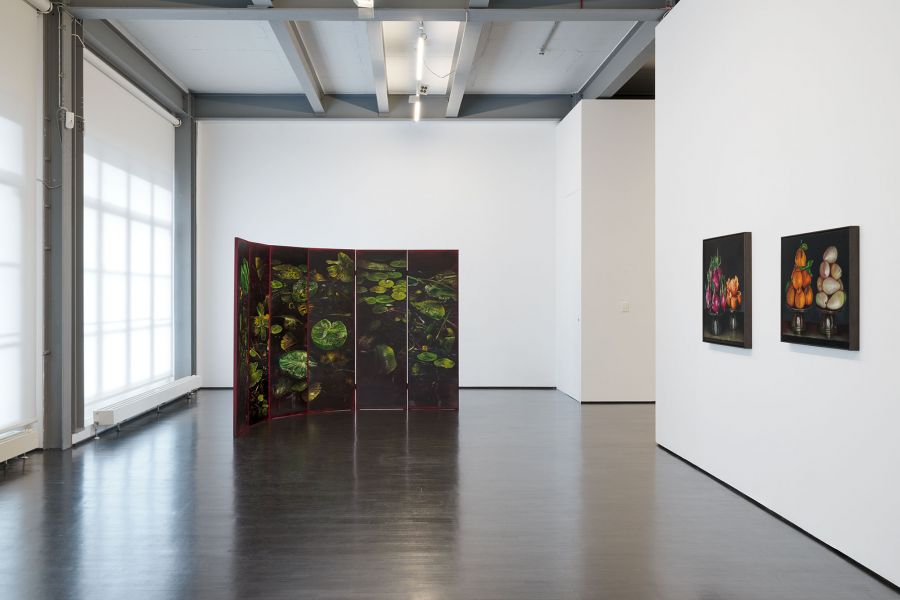
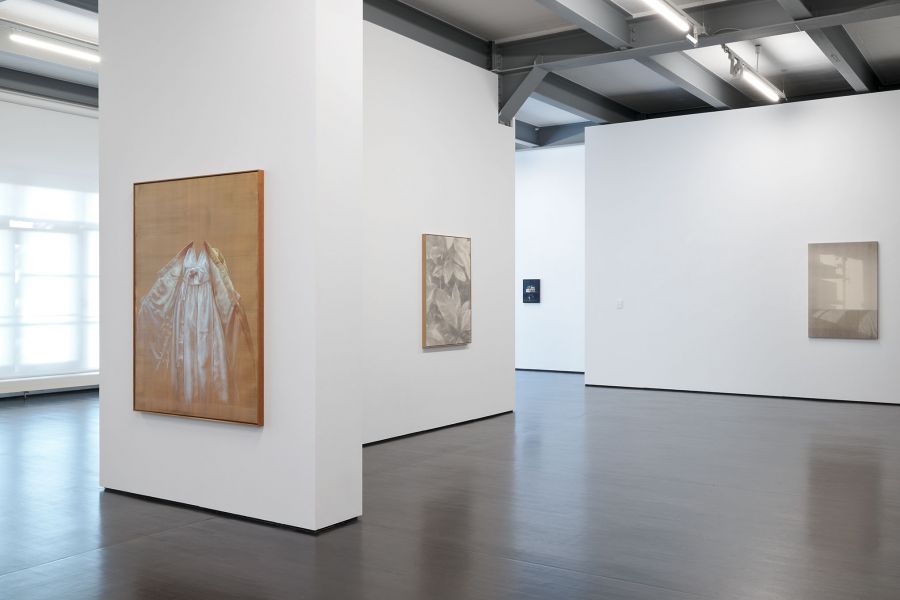
Through her appropriation of painterly genres and styles, she reflects on the associated pictorial traditions and the diasporic elements that can be inscribed within them. As the daughter of a Korean mother and a Spanish father, in her work she links collective and personal post-migrant histories, metonymically connected to certain items. Her Old Master-like plant paintings and still lifes are reminiscent of Spanish Baroque works by artists such as Francisco de Zurbarán and Juan Sánchez Cotán with their dramatic chiaroscuro; however, they portray East Asian cultivated plants such as hart’s tongue fern or water lilies. Ceremonial dishes, arranged in metal serving bowls with precisely placed light reflections, play an important role in the Korean cultural practice of remembering family ancestors. The multi-layered connotative charge of these objects thus becomes a trigger for negotiating subjective memory and cultural identity, as well as for exploring the ability of painting to directly affect the viewer.


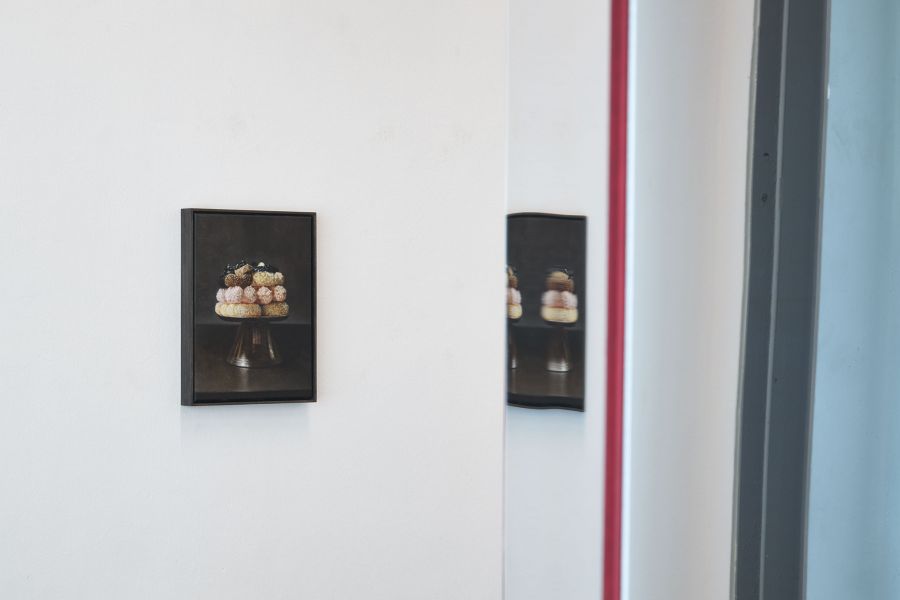

The “nature morte” of a still life with rice confectionery (Rice Biscuits, 2025), opulently arranged on a serving dish with a foot, presents itself in a double sense that spans time and space. The pingfeng (Pond Lillies – Folding Screen, 2025), perhaps the most significant element of East Asian interior design, also amalgamates pictorial traditions and thus cultural productions of meaning when it becomes the medium for a Europeanized representation of native pond plants. The individual elements do not form a coherent image when viewed as a whole; rather, they assemble different views like sections in space, contributing to the impression of a subtly deconstructed representation. Mirrored on the back, the screen incorporates its surroundings, including the here and now of its viewing.
The still lifes reflected in it also place the various groups of works that characterize Parada Kim’s artistic practice in
direct dialogue with one another—as different articulations of transcultural appropriation.
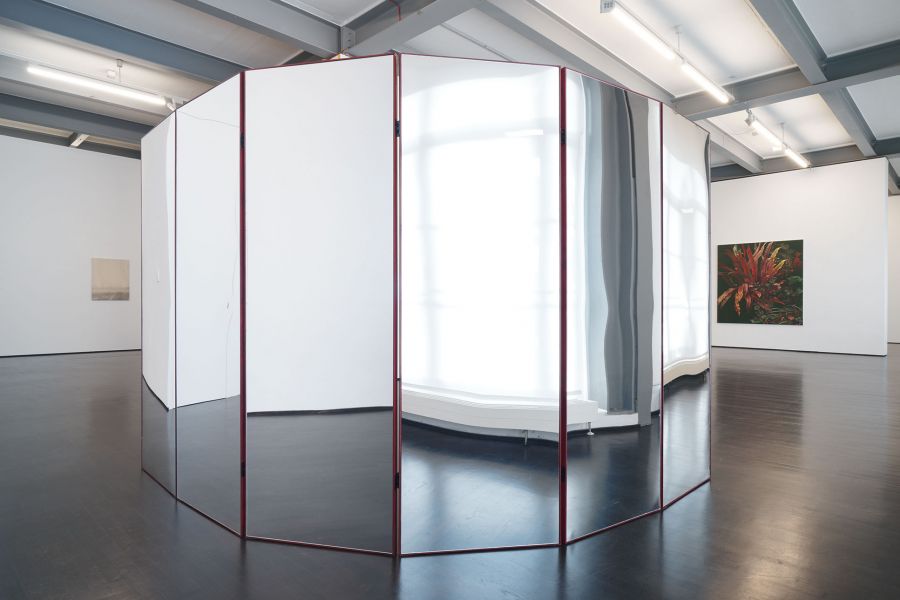

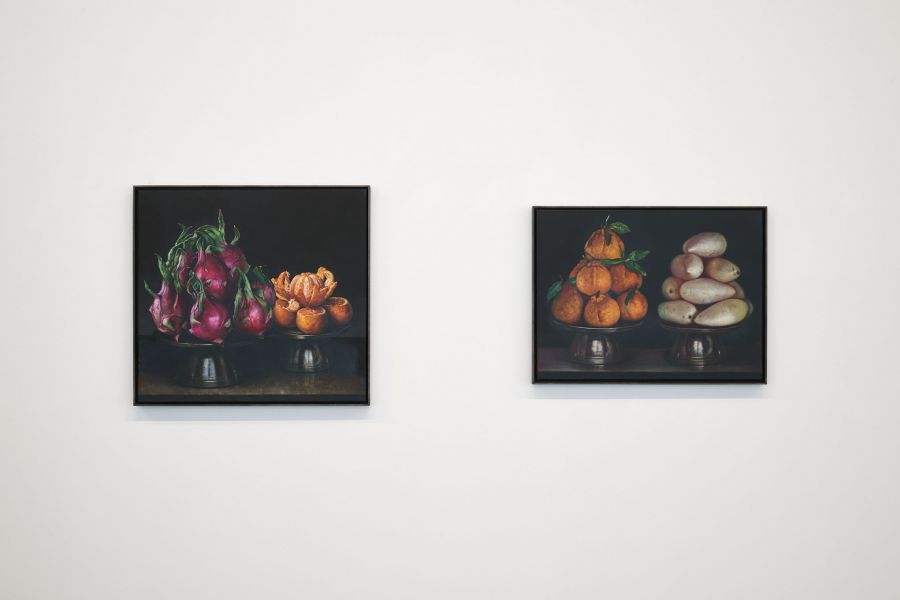

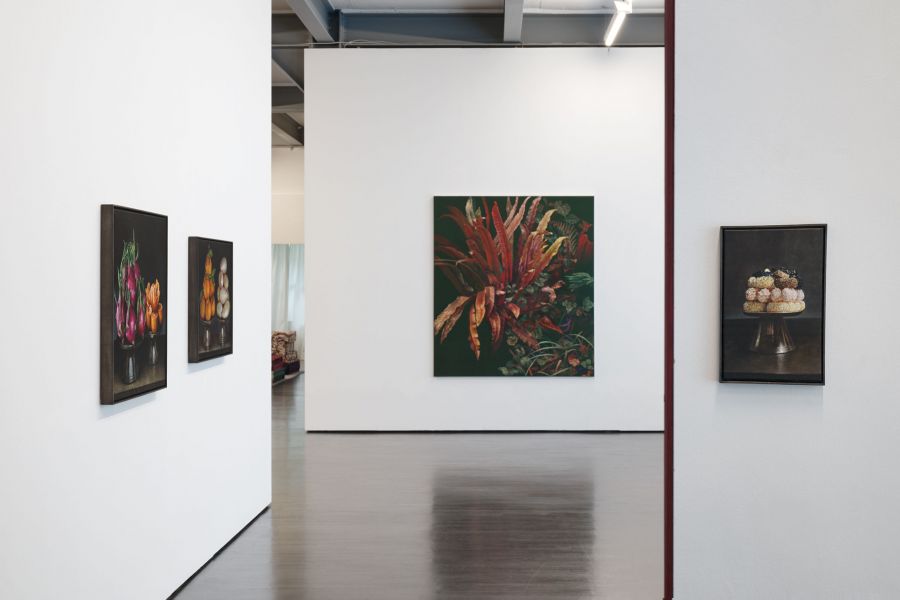

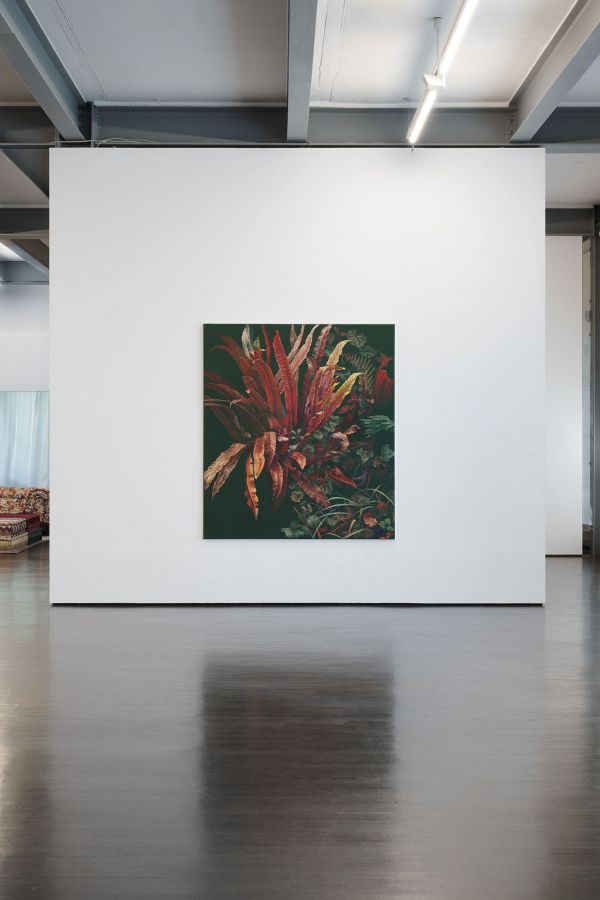
Parada Kim selects plants such as hart’s tongue fern—which she stages in two opulent images with lacquered surfaces (Hart’s Tongue Fern I & II, 2023), deliberately manipulating the color of the leaves—because of their widespread distribution and global migration. She depicts their characteristic features and form in large format—precisely because they are little-noticed plants that are rarely considered worthy of depiction.
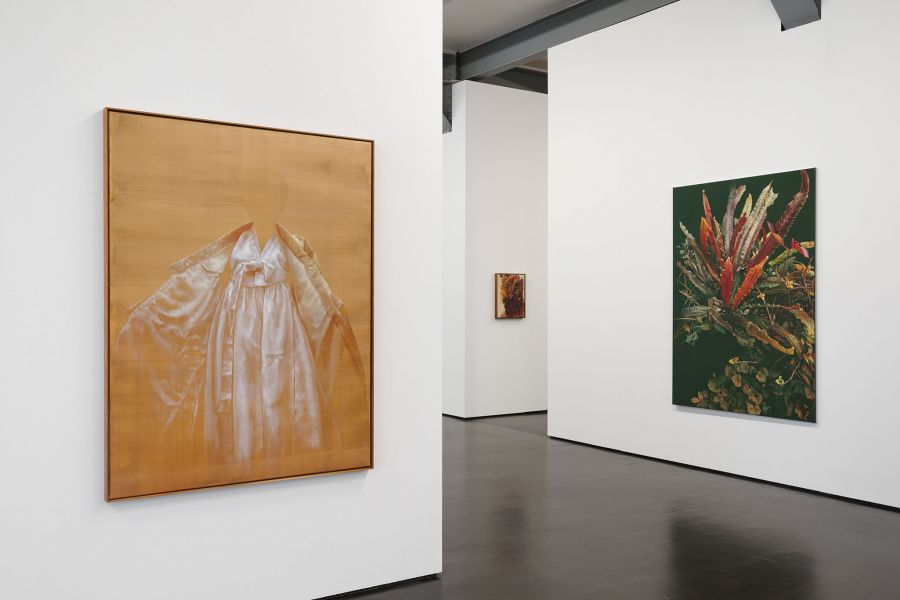

Her paintings of hanbok, traditional Korean clothing (The Embrace, 2024; Alchemilla – Red, 2025), become evocative portraits of the people who once wore them. However, this ceremonial garment also raises fundamental questions about geographical homeland and belonging. Worn by an immigrant to Germany, the hanbok now presented as a handcrafted showpiece, the splendor of which is recreated through with painterly means, remains a hybrid artifact between times and cultures. In The Embrace, a face can be seen in the relief the folds of the hanbok’s innerlining. The ancestors are always symbolically present in the garment, and it is through the painting that they enter the present.


Vanessa Joan Müller
(Translated from German by Gérard Goodrow)